
Running on Empty: How to Tell You’re Depleted, Not Just Tired
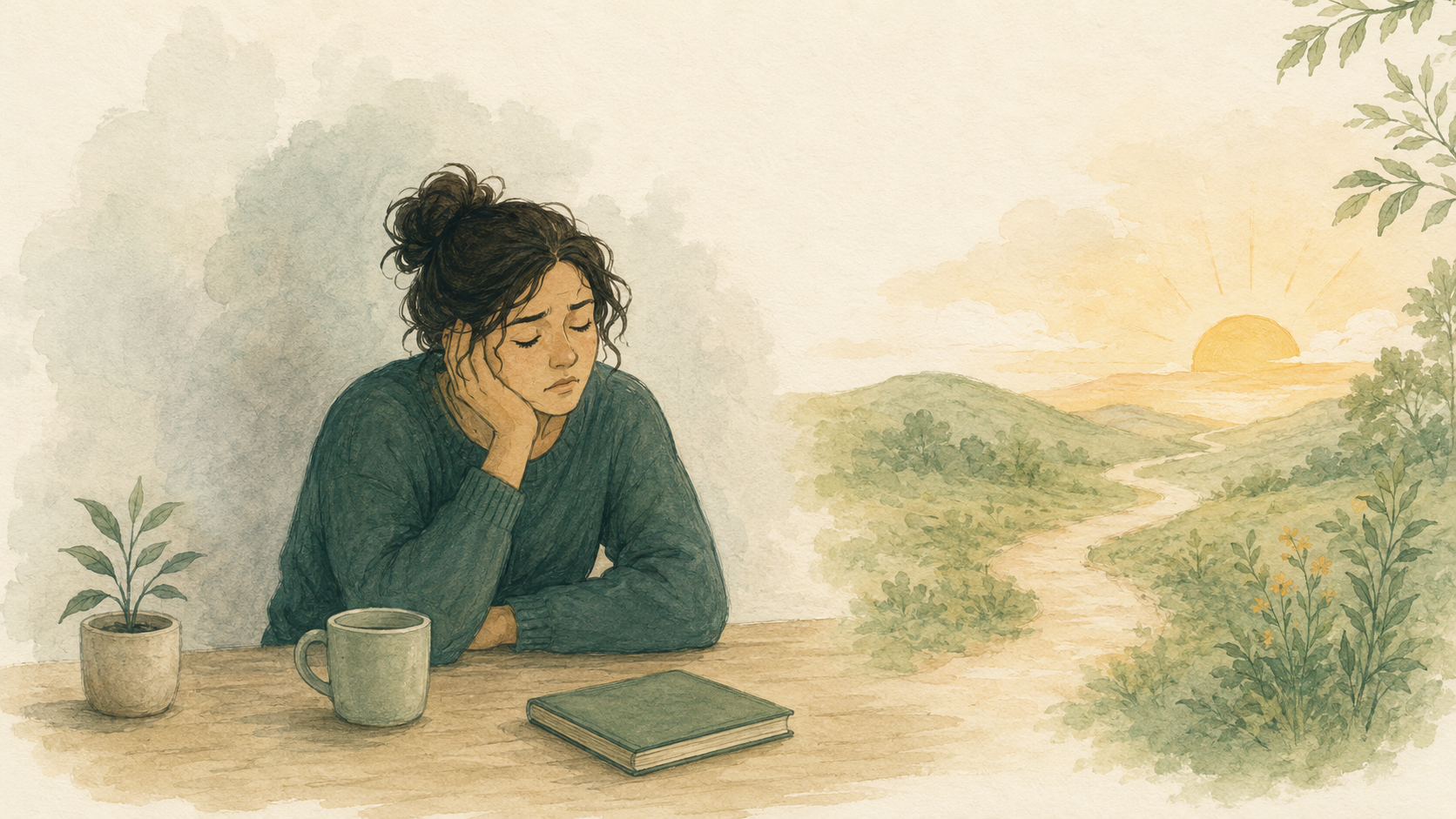
You slept, more or less. You had the weekend. And you're still running on empty — worn down in a way that a good night's sleep doesn't seem to touch. It's not the clean tiredness that comes after a full day. It's a deeper kind of low, the kind that's still there in the morning.
Ordinary tiredness and running on empty can feel similar, but they aren't the same thing, and telling them apart matters. One is a signal to rest. The other is a signal that something has been asking more of you than you've had a way to put back — for a while. This is about how to recognize the difference, and what actually helps.
What does it mean to be running on empty?
Running on empty is chronic depletion — a low that ordinary rest doesn't restore. Regular tiredness lifts after sleep or a break. Depletion lingers, because it comes from sustained demand outpacing recovery over weeks or months, not from a single long day.
Think of it as the difference between a phone that's low and a battery that's worn. A low phone charges back to full overnight. A worn battery drains faster and never quite gets there, no matter how long it's plugged in. When you're running on empty, a night of sleep is the overnight charge — helpful, but not the fix, because the problem isn't this one night. It's the accumulated gap between what you've spent and what you've replaced.
That gap is easy to miss while it's forming, because you keep functioning. You show up, you deliver, you handle things. The depletion runs underneath the functioning, which is exactly why it's so often mistaken for just being a bit tired.
Is it ordinary tiredness or something deeper?
A useful test is whether rest resolves it. If a good night's sleep or a real day off restores you, it was tiredness. If you rest and still feel worn down, flat, or unable to recharge, you may be running on empty — and the fix is different from just sleeping more.
Ordinary tiredness is specific and recent: you were up late, you had a hard week, and you can feel the cause. Depletion is diffuse and persistent. There often isn't one thing to point to, just a general sense that your reserves are thin and the smallest extra demand feels like too much.
The other tell is emotional. Tiredness makes you want to lie down. Depletion tends to flatten things — motivation, patience, interest. The stuff you normally care about feels far away or effortful. That flattening isn't a character change or a lack of gratitude. It's what low reserves feel like from the inside.
What are the signs you're running on empty?
The common signs are exhaustion that rest doesn't fix, growing distance or cynicism about things you used to care about, and a sense that ordinary tasks take more than they should. Together, these point to depletion rather than simple tiredness.
A few show up again and again. Everything feels like more effort than it used to, so small tasks pile up and even easy decisions feel heavy. You notice more irritability or a flat, detached feeling — a pulling-back from work, people, or things you once enjoyed. You may be tired but wired: exhausted and still unable to switch off, because a depleted system often stays braced. And rest stops delivering — you take the break and come back just as empty.
None of these on their own means much; everyone has a flat week. It's the pattern, and the persistence, that's worth paying attention to. If several of these have been true for a while, your system is likely telling you it needs more than a single early night.
When does depletion become burnout?
Burnout is the further end of this. The World Health Organization describes burn-out as an occupational phenomenon — specifically work-related, and not classified as a medical condition — marked by three things: energy depletion, increased mental distance or cynicism about your job, and reduced effectiveness.
It's worth knowing that the WHO frames burnout as tied to work in particular. But the same three-part pattern — exhaustion, distance, and feeling less capable — can show up from any sustained load, including caregiving and carrying a heavy life outside of any job. The label matters less than the signal: reserves have been low for long enough that they're affecting how you function and feel.
This is also the point where self-help has limits, and that's not a failure. If exhaustion, low mood, or a sense of detachment have been with you for weeks, or they're affecting your daily life, it's worth talking to a doctor or mental health professional. Running on empty can look like other things worth ruling out, and support helps. This isn't medical advice.
Why doesn't rest fix it?
Because rest replaces fuel, and depletion is also about load. A day off tops you up, but if you return to the same unrelenting demand with no room to recover along the way, you draw the reserve straight back down. Refilling faster than you empty means changing the balance, not just resting harder.
This is the same headroom problem underneath so much of this. When there's no capacity built into ordinary weeks — no margin, no regular recovery, no reduction in what's being asked — a single rest is a drop against a steady drain. It helps for a day and then the arithmetic reasserts itself. The reserve doesn't recover because nothing changed about the rate you're spending it.
So the work isn't only to rest more. It's to spend a little less, recover a little more often, and build some room back into the parts of life that have none. That's slower and less satisfying than the idea that one good weekend will fix it. It's also the thing that actually works.
What you can try
Gentle options, not a plan. Pick one.
Name it accurately. "I'm depleted, not lazy" changes what you do next. Depletion asks for recovery and less load; it doesn't respond to pushing harder, which only spends more of what's already low.
Subtract before you add. The instinct is to add a new wellness thing. Often the higher-leverage move is to remove one draining thing, even temporarily. Less out can matter more than more in.
Build in small recoveries. A few real pauses across the week do more than one big rest at the end of it. A short walk, a few quiet minutes, a genuine lunch break — recovery works better distributed than saved up.
Regulate, don't just rest. A depleted system is often still braced. A slower exhale or a few minutes of low-input quiet can help it actually downshift, so the rest you do get lands. (Our post on nervous system regulation goes deeper.)
Get support if it's persistent. If this has been going on for weeks, talking to a professional isn't an overreaction. It's the sensible next step.
If it helps, Vara is built to help you notice where you actually are and create a little capacity back — with practices matched to a depleted state, not one more thing to push through.
Frequently asked questions
Why am I still tired after a full night's sleep?
If sleep isn't restoring you, the issue may be deeper depletion rather than a single bad night — the accumulated gap between demand and recovery. It can also have medical causes, so persistent unrefreshing sleep is worth raising with a doctor.
What's the difference between being tired and being depleted?
Tiredness is recent and resolves with rest. Depletion is persistent and doesn't lift after sleep or a day off, because it builds up over time from sustained demand. Depletion also tends to flatten mood and motivation, not just energy.
Is running on empty the same as burnout?
It's on the same spectrum. Burnout is the more severe, established end — the WHO describes it specifically in a work context — while running on empty is the broader felt state of chronic depletion that can precede it.
How do I recover when I'm running on empty?
Recovery usually means reducing load and adding small, regular recoveries, not just one big rest. If it's been weeks, or it's affecting your daily life, talking to a professional is a reasonable and helpful step.
You don't refill an empty tank by driving harder, and you're not weak for running low. Depletion is what happens when a full life gives back less than it takes for long enough — and the way out is less about pushing through and more about making some room to recover. Start small. Even a little capacity back changes how the rest feels.
If this resonates, Vara might be a place to start — a calmer way to find energy that's actually there.
Vara is a wellness tool, not a medical device or a replacement for therapy or professional care. If exhaustion or low mood persists or affects your daily life, please talk to a healthcare professional.
